The Sandbag Shift: Who's Actually on Call When the Medway Rises?
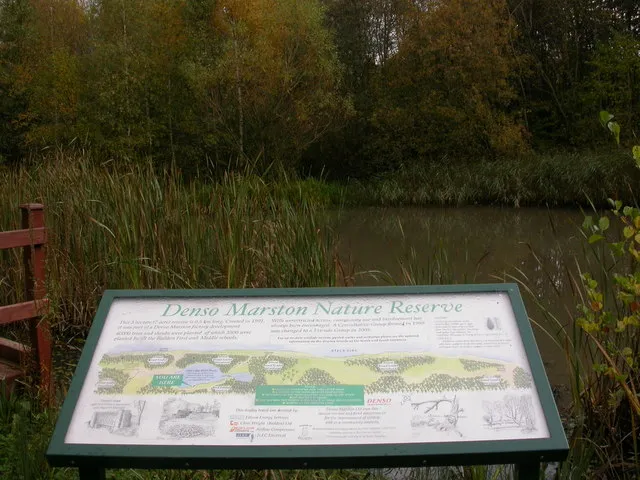
Photo: Derek Parkinson, CC BY-SA 2.0, via Wikimedia Commons
There's a particular kind of phone call that starts a flood warden's day. It's not dramatic. Nobody shouts. It's usually a neighbour saying the brook has come over the road at the bottom of the hill, or that the water is lapping the step at the back door again, or asking — quietly, apologetically — whether anyone has a spare pair of wellies for a grandkid.
By the time the Environment Agency's automated warning pings, the person knocking on doors in Yalding or Robertsbridge or Godalming has often been awake for two hours. They've already moved a trailer, checked the gauge, and texted a WhatsApp group of about thirty people who all know exactly which drains block first.
They are not paid. They are not, in any legal sense, in charge of anything. And right across the South East, they are the actual first line of flood response.
Hi-vis, no statutory footing
Flood warden schemes are one of those bits of local infrastructure that barely exists until it's needed. Most are run through parish councils, community groups or a lead local flood authority that has quietly delegated a chunk of its worry to volunteers. There's no single national standard, no guaranteed kit budget, and no consistent training offer. What you get depends enormously on which council you happen to live under.
In one Kent village, wardens told us they'd been issued a torch, a laminated card of phone numbers and a vague instruction to "keep an eye on things". In parts of Surrey, the scheme is more developed — regular briefings, a stock of sandbags, someone from the borough who actually answers emails. In swathes of Sussex, it's a Facebook group and a retired engineer with a rain gauge.
None of this is a criticism of the wardens. It is a description of what happens when a statutory duty gets quietly outsourced to goodwill.
The budget question nobody asks out loud
Here's the thing about a volunteer flood warden: they are cheap. Genuinely, embarrassingly cheap. A few hundred pounds of equipment, some photocopying, and you've got a person who will get up at 3am in February and stand in cold water directing traffic away from a ford.
That's the deal. And because it's such good value, no one is in a hurry to renegotiate it.
Meanwhile the money that does exist for flood defence goes mostly on capital schemes — walls, embankments, culverts, the big visible stuff that gets a photo op when it opens. Maintenance and community resilience are the unglamorous cousins, and they get squeezed first. Wardens describe funding that arrives in one-year bursts, enough to restock a sandbag store but not enough to plan three winters ahead.
And then there's insurance. Not for the houses — we've written about that retreat elsewhere — but for the volunteers themselves. Some schemes have it. Some assume the parish council's policy covers it. A few wardens we spoke to weren't entirely sure, which is not a great place to be when you're wading through a flooded lane in the dark.
The bit that doesn't fit on a risk assessment
Ask a warden what the hardest part of the job is and they rarely say the water. They say the door.
Knocking on someone's door at 5am to tell them the water is coming, and watching them decide whether to believe you. Talking down a man in his seventies who has lived in the same house for forty years and is not leaving. Sitting with a family in a village hall at midday while a loss adjuster is on hold. Fielding the same phone call from the same frightened person three times in one night because there is nobody else to call.
That's care work. It's emotional labour performed by people who signed up to move sandbags. And there is almost never any support structure around it — no debrief, no counselling, no one checking whether the warden who spent last February wading through sewage water is doing alright this year.
Burnout in these schemes tends to look like quiet attrition. Someone stops replying to the group chat. Then someone else does. Two winters on, the scheme that was once twelve people strong is three people and a dead spreadsheet.
Councils are very comfortable with this arrangement
Let's be clear about the politics of it. A functioning flood warden network is not a substitute for a lead local flood authority doing its job. It doesn't replace proper drainage maintenance, honest planning decisions about where we build, upstream nature restoration, or a national funding settlement that isn't announced in five-year spasms.
But a volunteer network is enormously convenient for anyone who'd rather not be held to those things. It lets a council say "the community is well prepared" while the gully-cleaning contract slips another year. It turns a failure of the state into a story about plucky local people pulling together, which is a much nicer headline and a much worse outcome.
We should be suspicious of that story. Warm towards the people, cold towards the framing.
So what do rebels actually do?
Plenty — as long as we're honest about the boundary.
Back the wardens, don't become them. Offer practical solidarity: help with a kit amnesty, raise money for decent torches and dry suits, turn up to a village hall clean-up in March when the news cameras have gone. Mutual aid is real and it matters.
Amplify the ask. Wardens are often too polite, too embedded, or too exhausted to make political demands. We aren't. When a scheme is running on goodwill and a broken pump, that's a story to tell loudly, to councillors, to MPs, to the local press.
Push on the upstream stuff. Flooding in the South East is not weather that happens to us. It's drainage underfunded, wetlands drained, fields compacted, and houses approved on floodplains. Every planning committee and every local plan consultation is a flooding decision wearing a different hat.
Don't let the state off the hook. The single most useful thing XR South East groups can do is refuse the framing that community resilience is a replacement for statutory responsibility. Support the volunteers and demand the funding, the maintenance contracts, the training, the insurance and the accountability that should come with them.
The line is people
This winter, when the alerts start landing, remember who's actually holding it. Not the agency with the press office, not the cabinet member with the statement, but the person in the slightly-too-big hi-vis at the end of your road who knows exactly which drain blocks first.
They deserve better than a torch and our gratitude. They deserve a system that doesn't need them to be heroes in the first place.
If you're part of a flood warden scheme in Kent, Sussex or Surrey and want to talk about what your group needs, get in touch with your local XR South East group — we're compiling a winter resilience roundup for the new year.