The A27 Bypass Is a Carbon Decision Wearing a Traffic Cone
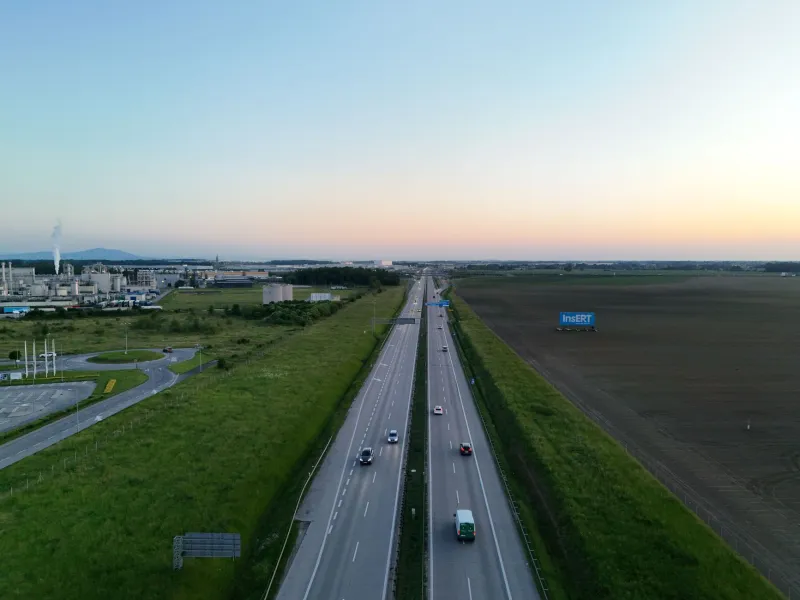
Picture the A27 crawling past Arundel on a Friday afternoon. Caravans, vans, commuters, a tractor doing its best. It is tempting to think: just build the bypass. That is the pitch, and it has been the pitch for years. But the question is not whether traffic is annoying. The question is whether adding asphalt reduces total driving or simply redistributes it, grows it, and locks it in. Right now, in November 2026, the A27 Arundel Bypass is still being pushed as a traffic solution. It is better understood as a carbon decision with a cone on top.
Induced demand, without the jargon
Induced demand is the idea that new road capacity creates more traffic. Not because drivers are silly, but because roads change the maths of everyday life. A new bypass shortens a journey, so more people make it. Someone who used to take the train drives instead. A trip that was once too fiddly becomes normal. Shops, warehouses and housing get built where car access is easy, which creates new car trips. Over time, traffic expands to fill the space.
This is not a fringe theory. It is why transport planners talk about 'predict and provide' as a trap. You forecast traffic growth, build for it, and the building helps produce the growth. The scheme's own models can show journey-time savings while total vehicle kilometres rise. That may look like a win in a congestion spreadsheet. For the climate, it is a liability with a nice junction.
What the carbon numbers leave out
Scheme carbon appraisals can be narrow. They may count some tailpipe emissions from predicted traffic, but the full picture is messier. Ask whether the appraisal includes construction and materials, land take and lost carbon storage in the South Downs, induced traffic, maintenance and lighting, and what happens at end of life. Ask for the counterfactual too: what happens if the money goes into buses, rail, walking, cycling and demand management instead?
The A27 runs along the edge of the South Downs National Park and through the Arun valley. This is not a blank canvas. It is farmland, woodland, water and communities. Land use matters for carbon, and so does fairness. Bypasses can shift traffic onto local roads, worsen air quality for people who cannot drive, and hoover up cash that could fund the bus services the South East desperately needs.
The UK has legally binding carbon budgets. West Sussex County Council, Arun District Council and the South Downs National Park Authority all have climate commitments on paper. A road that increases vehicle kilometres makes those commitments harder to meet. That is the connection the scheme's promoters would rather you missed. This is not just a local transport scheme. It is part of the region's wider climate obligations, and it should be judged on that basis.
One bypass is never just one bypass
Arundel is not an isolated case. The South East has a pipeline of road-building schemes being assessed one by one. Each one claims a small carbon impact. Each one assumes the others do not really matter. Add them together and the cumulative carbon is not small at all. Programme-level carbon accounting is the missing piece. If councils and National Highways will not publish it, rebels should ask why.
How to intervene
You do not need to be a transport economist to make trouble. You need a few good questions and some persistence.
- Consultation responses. If a consultation is open, respond. If it has closed, write anyway. Ask specifically whether the scheme's carbon appraisal includes construction, land use and induced traffic. Ask for the no-build alternative to be published in full. Ask how the scheme squares with the council's climate commitments.
- Council scrutiny. West Sussex County Council, Arun District Council and the South Downs National Park Authority all have public question times and scrutiny processes. Turn up. Ask for a motion. Ask for the scheme's carbon numbers to be debated in public. Bring a friend and a flask.
- Freedom of Information requests. Send FOI requests to National Highways and the relevant councils. Ask for traffic model assumptions, scheme and no-scheme outputs, the full carbon appraisal, correspondence with the Department for Transport, land-use assumptions, and sensitivity tests. You do not need to be an expert to ask for the receipts.
- Your MP. Write to them. Ask whether they support the scheme and how they reconcile that with the UK's carbon budgets. Ask them to publish the answer.
- Local groups. Link up with XR South East groups and local transport campaigns. A consultation response from one person is a data point. A hundred responses and a council question is a problem for the scheme.
Do not let the model do the politics
Traffic models are not neutral. They contain assumptions about growth, driving costs, land use and what counts as a benefit. If we debate the bypass only on congestion, we lose the frame. The frame should be carbon, land, money and fairness. The A27 does need attention. But more asphalt is not the same as a better journey, and it is certainly not a climate plan. Ask the awkward questions now, before the concrete sets.