Waiting for Dirt: The South East's Allotment Queues Are a Land Justice Problem
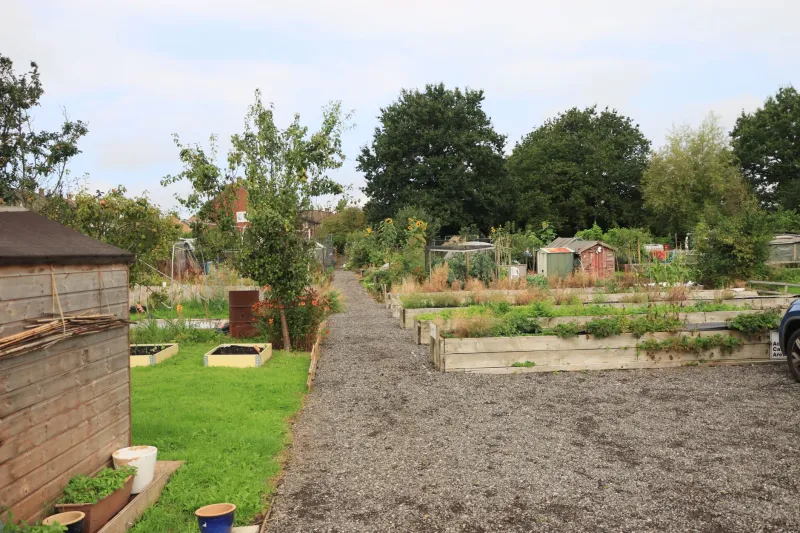
There's a plot on the edge of a town in East Sussex that has been "coming up for review" since 2019. The waiting list for it has 84 names on it. The person at number 12 has been on that list since before their youngest started reception. They've now got a teenager, a back garden the size of a bath mat, and a growing suspicion that the whole thing is a stitch-up.
They're not wrong, exactly. Not in the sense of a conspiracy in a smoke-filled room — more in the sense that a queue is never just a queue. It's a decision someone made about what land is for.
The waiting list is a land-use policy in disguise
Here's the thing about allotments that gets lost whenever a council leader describes them as "a lovely community amenity": a site of 40 plots is 40 households growing a meaningful chunk of their own food, on land that also happens to cool the street, hold water, host pollinators and give a few dozen people somewhere to be on a Saturday that isn't a retail park.
That's not a hobby. That's infrastructure. We talk about water mains and bus routes and GP surgeries in those terms. We should talk about growing space that way too — and the moment you do, years-long waiting lists stop looking like a popularity problem and start looking like a failure of provision.
Across the South East the picture is patchy but consistent in one respect: demand massively outstrips supply, and the gap is being managed by queuing rather than by creating more space. Some districts report waits of five years. Others won't even publish a number, which tells you something in itself.
"It's just a hobby" is doing a lot of heavy lifting
Be honest about who this is for. An allotment is a route to cheaper, fresher food at a time when the weekly shop has become a source of genuine anxiety for a lot of households. It's a place to be outside without paying for a gym. It's somewhere a retired person can keep a routine and a nine-year-old can learn that carrots don't come from a plastic bag.
It's also, quietly, one of the few ways a household without a garden can adapt to a heating climate: shade, soil, water retention, a bit of local cooling on a street that's otherwise all tarmac and wheelie bins.
So when a council says it can't afford to bring derelict plots back into use, or sells off a site for "much-needed homes" (usually not the kind anyone on that waiting list can afford), it's not trimming a nice-to-have. It's withdrawing a piece of public infrastructure from the people least able to replace it privately.
The quiet squeeze on growing land
There's a pattern worth naming here, and it shows up across the region. A site sits half-derelict for years, because the budget for clearing it never quite materialises. Its condition then becomes the argument for disposing of it. Option agreements get mentioned. "Best value" gets mentioned. The plot-holders' association gets told the decision was taken some time ago, thank you for your interest.
Meanwhile, the plots that do get let go to whoever's at the front of the queue — which, in practice, is often whoever had the time and confidence to ring the council every fortnight for three years. That's not a criticism of those people. It's a criticism of a system that rewards persistence and admin skills over need.
We should be blunt about what that means. If access to land depends on how good you are at chasing a phone line, then access to land will keep flowing towards people who already have a bit of slack in their lives. That's a climate justice issue, because the people with the least slack are also the ones facing the sharpest end of food prices, heatwaves and flooding.
What rebels and growers are already doing
Nobody's waiting for permission. That's the encouraging bit.
- In Brighton and Hove, growers tied to tenants' groups and food banks have been pushing for growing space on estate land and unused corners of parks, arguing that a raised bed outside a block of flats does more for food security than another seasonal flower display.
- In Southampton, a plot-holders' association has started keeping its own register of derelict plots and asking the council to publish a proper waiting-list breakdown — by ward, by wait time, by whether the site is actually cultivable. Once you can see the data, the argument changes.
- In Kent, community food projects running on church land and school grounds are quietly demonstrating that you don't need a 250-square-metre plot and a shed to grow a serious amount of food.
- In Oxfordshire and Berkshire, campaigners have been linking allotment pressure to housing allocations, pointing out that new developments routinely promise "green space" without ever specifying that any of it is for growing.
What these efforts have in common is that they reframe the ask. Not "please give us a nice thing" but "this is public land, and it should be doing public work."
Five things councils could do before the next growing season
- Publish the queue. Actual numbers, by site, by wait time. If the list is years long, say so.
- Audit and restore. Find the derelict plots, cost the clearance, and put it in the budget as capital spend — because that's what it is.
- Write growing space into new developments. Not "amenity space". Allotments, orchards, community beds, with a management plan and a water supply.
- Protect sites in the local plan. A designation with teeth, not a warm sentence in a supplementary document.
- Prioritise need, not persistence. Simple, transparent criteria that give weight to households without gardens, low-income households and people who've been waiting longest.
None of that is radical. It's just the boring, unglamorous work of treating a public asset like a public asset.
Get in on it
If you're on a waiting list, you're already part of this. Find your plot-holders' association, or start one. Ask your council for the numbers — all of them — and send them to us, because we're building a picture of the region's growing space and we can't do it from press releases.
And if you've got a patch of unloved land near you — a corner of a rec, a strip behind the shops, a bit of churchyard nobody uses — there's a decent chance a group near you is already eyeing it up. Go and say hello. Bring a spade.
The queue isn't inevitable. It's a choice. Let's make them choose differently.