Billions in the Balance: Who Really Decides Where South East Pension Money Goes

You don't need to be a fund manager to have skin in this game. If you teach, empty bins, drive a bus, work in a care home, or ever did any of those things, there's a decent chance you're in the Local Government Pension Scheme. Every month a slice of your wages — matched by your employer — lands in a fund that is making decisions about what kind of world you retire into.
Across Kent, Sussex, Surrey and Hampshire those funds add up to tens of billions of pounds. Some of it is still sitting in companies with no credible plan to stop drilling, digging and burning. Not because a councillor somewhere is twirling a moustache, but because nobody has asked, loudly, in public, with paperwork to hand.
So here's the map. Not of pipelines and platforms — of rooms, calendars and documents.
The funds, roughly, in numbers
All figures are ballpark and drift with the markets, so check the latest annual reports before you quote anything at a meeting.
- Kent County Council Pension Fund — the big one, administering for the county and the districts. Not far off £8bn.
- East Sussex Pension Fund — covers the county, Brighton & Hove and the districts. Around £5bn.
- West Sussex Pension Fund — a shade under £5bn.
- Surrey Pension Fund — north of £6bn.
- Hampshire Pension Services — the heavyweight, administering for Hampshire, the Isle of Wight, Portsmouth and Southampton. Roughly £10bn.
- Plus Medway and a scatter of smaller district funds hanging off the county schemes.
Add it up and you're well past £30bn of South East retirement money. That is not pocket change, and it does not have to be spent on the problem.
Who actually decides
Each fund has an administering authority — usually a county or unitary council — and a pension committee. That committee is made up of councillors, sometimes a co-opted expert, and, if you're lucky, a scheme member representative. Behind them sit officers, an actuary and an investment consultant who between them shape what the committee is allowed to think is sensible.
The committee signs off an Investment Strategy Statement. That document is where divestment lives or dies. A paragraph on climate risk can be a hard commitment or a sop, and the difference is usually one adjective.
Meetings are public. Agendas go up a week or so beforehand. There's normally a public question time — three minutes if you're fortunate, notice in writing if you're not, and occasionally a chair who treats democracy as an interruption. Go anyway. Being a known face changes the temperature of a room.
The pooling problem
This is the defence you'll hear first: we'd love to divest, but our money is in a pool.
They aren't lying. Most South East funds have handed the running of their assets to one of two pooling vehicles. ACCESS — A Collaboration of Central, Eastern and Southern Shires — covers Kent, East Sussex, West Sussex and Hampshire among others. Border to Coast takes Surrey and a spread of northern funds. The pools buy the shares, hold the shares and vote the shares. Your committee owns the pool; the pool owns the portfolio; the paper trail between them is thinner than it should be.
That reframes the campaign. The question isn't just does our fund hold Shell. It's: what does the pool hold, who votes on our behalf, and where are the voting records published?
The 2026 valuation window
Every three years the funds get valued. The valuation dated 31 March 2025 is working its way through the system during 2026, setting employer contribution rates for the years ahead. In plain English: officers and actuaries are already deep in the numbers, thinking about a twenty-year horizon.
That is an opening. Ask what an unstable climate does to a funding plan that stretches to the 2040s. Ask whether stranded fossil assets are a risk the actuary has priced. Ask whether the answer to that risk is more exposure or less.
The tools, in rough order of effort
- Turn up. Find your fund's committee calendar and put the next two dates in your phone. Webcasts and minutes exist if you can't make it in person.
- Ask a question. Written notice, usually a set number of days ahead, three minutes at the mic. Keep it to one demand and one date.
- Freedom of Information. Request the current holdings list, the pooled fund breakdown and any correspondence with the pool on climate voting. Ask for it in spreadsheet form. You'll get a partial answer, which tells you something in itself.
- Read the climate risk report. Most funds publish a TCFD-style disclosure now. Look for scenario analysis, and look for whether the scenario assumes everything works out.
- Write to your councillor — specifically the ones on the pension committee, not the generic council inbox. Name them. Ask how they voted.
- Follow the pools. Both ACCESS and Border to Coast consult on strategy and publish stewardship reports. Responding to a consultation takes twenty minutes and counts for more than a petition.
- Find your people. Every county in the region has a Fossil Free or UK Divest-adjacent group, or rebels who'd happily start one. Divvying up the FOIs is the fastest way to make progress.
What a good answer looks like
Not a press release about engagement. A dated commitment to stop new investment in fossil fuel expansion, a plan to wind down existing exposure, and transparency that lets anyone check: quarterly holdings published in full, voting records published in full, and a scheme member on the committee with an actual vote.
And hold the Just Transition line too. Divestment is the entry point, not the finished argument. While you're in the room, ask about warm homes in Hastings, retrofits in Thanet, and whether any of that £30bn could be building something in the region rather than fuelling something overseas.
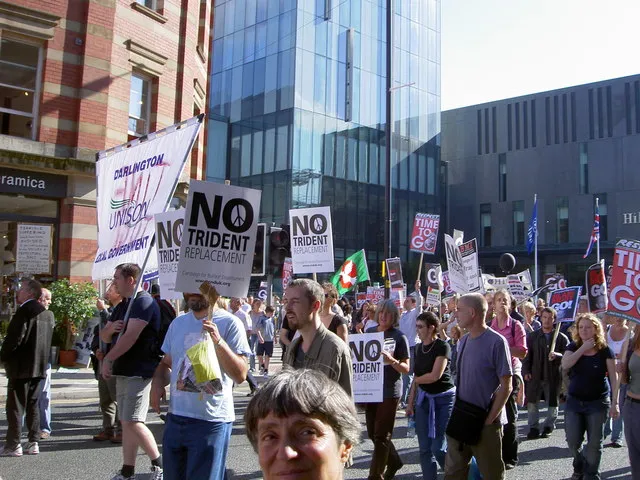
Committees meet through the winter and into the spring. Pick your fund, find the date, and turn up with one question written on a piece of paper. That's how this starts — and it's how it's been won elsewhere.
Got a pension committee date worth sharing? Send it to the XR South East crew and we'll add it to the roundup.