When the Sea Comes for the South East: A Rebel’s Field Guide to Rising Tides
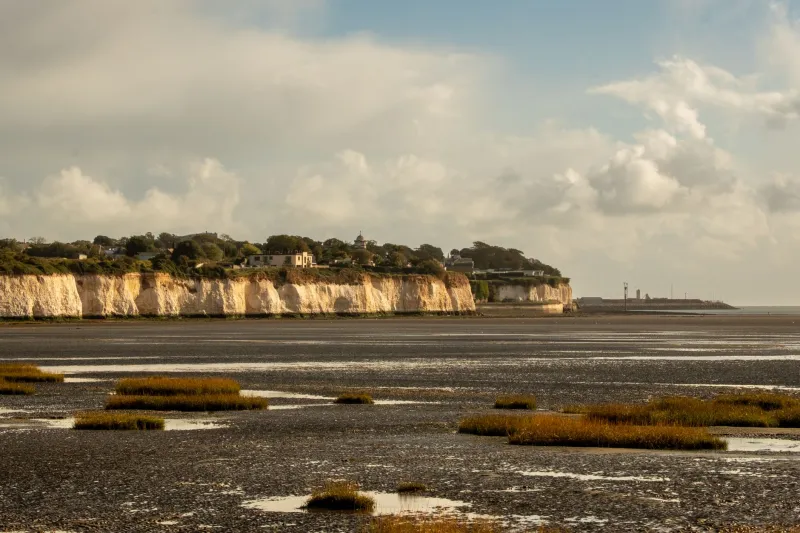
On a grey morning in Romney Marsh, the wind does most of the talking. It cuts across the levels, rattles the fences and reminds you that this flat, strange, beautiful landscape was built by the sea and is still at its mercy. A few miles away in Rye, the tide marks on old buildings tell a similar story. The South East coast is not a postcard backdrop. It is a live frontline, and it is moving.
As of autumn 2026, sea-level rise is no longer an abstract line on a graph. It is showing up in insurance quotes, in council reports, in the anxiety of people who have watched winter storms chew away at cliffs and shingle banks. For XR South East, this is core climate justice territory. The communities most exposed are often the ones with the least power to shape the decisions being made about their future.
The coast is not a backdrop
Sea-level rise does not work alone. It combines with storm surges, heavier rainfall, ageing drainage and coastal erosion. In the South East, that mix looks different from place to place. Soft cliffs in Sussex crumble. Low-lying marshes in Kent and Hampshire rely on sea walls and shingle ridges. Estuaries and harbours funnel water inland. Some places face flooding; others face the slower, grinding loss of land itself.
The result is a patchwork of risk. A village hall in one parish might be mapping evacuation routes while a neighbouring council is still approving new homes on a floodplain. A coastal path that existed five years ago may now be a diversion sign. People are not just losing property. They are losing familiar places, local memory and a sense of safety.
Flashpoints from Kent to the Isle of Wight
In Kent, the Romney Marsh and Dungeness area is one of the clearest examples of the tension between defence and retreat. The Marsh is protected by a web of sea walls, but the long-term questions are enormous. Further east, Sandwich and Deal face their own pressures, while Folkestone and Hythe sit below cliffs and behind defences that need constant attention. Rye and Winchelsea are reminders that medieval towns can be modern flood risks.
In Sussex, the Pevensey Levels are a low-lying puzzle of drainage, farming and wildlife. Bexhill, Eastbourne and the cliffs towards Brighton show how erosion and flood risk can sit side by side with dense housing and busy transport routes. Shoreham and the Adur estuary have their own floodplain worries. Selsey and Pagham have long experience of coastal change, and Chichester Harbour is a delicate mix of nature, boating, farming and housing.
In Hampshire, Portsmouth, Langstone Harbour and Hayling Island are obvious flashpoints. Southampton Water and the Solent are shaped by tides, shipping and dense development. On the Isle of Wight, places like Ryde, Shanklin and Yarmouth face coastal squeeze, where rising seas meet hard defences and limited space to move.
What councils are planning, and what they are not
Councils and agencies do have plans. Shoreline Management Plans set out long-term approaches: hold the line, manage realignment or allow natural change. The Environment Agency maps flood risk. Coastal groups and partnerships bring together councils, conservation bodies and sometimes communities. In 2026, there is plenty of technical language floating about: resilience, adaptation, managed realignment, funding formulas.
The problem is not that nothing is happening. It is that the big decisions are often made far from the people who will live with them. Managed realignment can sound sensible in a strategy document. On the ground, it can mean a farmer losing land, a community losing a road, or a village facing the idea that its sea wall will not be maintained forever. Funding tends to follow property values and national formulas, not need or justice. Insurance is already reshaping who can afford to stay.
There is also a gap between emergency planning and long-term adaptation. Councils may have flood response plans, but fewer have honest conversations about what happens when defence becomes impossible or unaffordable. Residents are often told to be resilient without being given real power over the choices.
Don’t parachute in
This is where rebels need to be careful. Coastal communities are not a stage for our banners. People who live with flood risk may be grieving, angry, exhausted or simply trying to get through the week. Some will want direct action. Some will want a parish council meeting. Some will want to talk about insurance and school routes. All of that is legitimate.
The first rule is to listen before you campaign. Find out what local groups already exist. Ask what they need. Offer skills, not instructions. If you are from inland, say so. Do not claim to speak for a village you have visited twice. And do not turn residents into props for a national narrative they have not chosen.
Practical ways to plug in
Start with the paperwork. Read your local Shoreline Management Plan. Search your council’s flood risk and adaptation reports. Ask for the evidence behind new developments on the coast. These documents are boring, but they are where the decisions hide.
Go to the meetings. Coastal forums, parish councils, scrutiny committees and consultation events are not glamorous, but they are where questions land on the record. Ask about maintenance budgets, evacuation plans, insurance, social housing and whether adaptation plans include renters and low-income households.
Support local flood action groups and community land trusts. Offer help with mapping, communications, transport or mutual aid. Join citizen science projects that monitor erosion or local flooding. If you are part of a coastal community, consider becoming a flood warden or helping build a neighbourhood emergency plan that actually includes disabled and older residents.
Where direct action is right, keep it local and led by those affected. A stunt on a beach miles from the people who live there is not solidarity. A well-timed intervention at a council meeting, backed by residents, can be. The tide is coming for the South East either way. Our job is to make sure the response is democratic, fair and honest about what is at stake.