Every Body In: A South East Checklist for Inclusive Rebellion
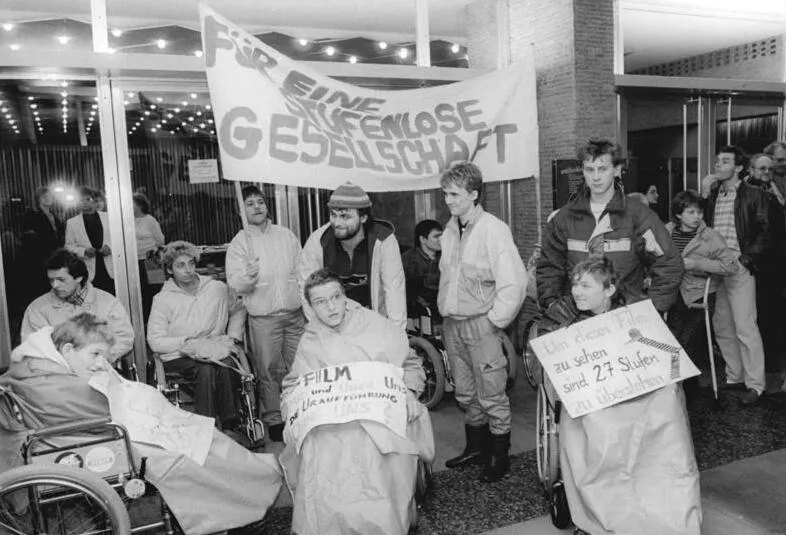
Photo: Zimmermann, Peter, CC BY-SA 3.0 de, via Wikimedia Commons
XR South East likes to say we are a movement for everyone. But if the meeting is up two flights of stairs, the action starts a mile from the nearest accessible station and the only food is a dry flapjack, we are not practising what we preach. Accessibility is not a niche issue. It is about who gets to show up, who gets heard and who ends up carrying the emotional and physical labour of a protest.
This is not about ticking a box before the next action. It is about designing rebellion so that disabled, neurodivergent, older and rural rebels can take part without having to fight the logistics first. Here is a practical checklist for South East groups, written from the messy reality of village halls, train replacements and unpredictable weather.
Start with the route, not the banner
The South East is not one place. It is dispersed towns, villages, coastal strips and rural roads with dodgy bus services. If your action is only reachable by car, say so early. Better still, fix it. Organise lifts, minibuses or a train buddy system from key stations. Publish clear travel info: which station, which exit, whether it is step-free, how long the walk is and whether there is a taxi rank.
Think about cost too. Travel bursaries are not a luxury. For some rebels, a return train ticket to a county town is the difference between attending and staying home. Car shares should include accessible vehicles where needed. If you are meeting in a rural hall, check the parking, the drop-off point and the path from the car park. A muddy field is not an access route.
Make the room fit the people
Before you book a space, ask basic questions. Is there step-free access? Are the toilets accessible? Is there a quiet room or a corner away from the main noise? Is the lighting harsh? Can the windows open? Is there a hearing loop? Can chairs be arranged in a circle rather than rows? Is there parking near the door?
Sensory needs matter. Fluorescent lights, strong perfume, crowded rooms and sudden noise can make a meeting unbearable. Send the agenda in advance. Use plain English. Offer large print and digital copies. If you are using slides, keep them simple. If you are showing a film, use captions. If someone asks for a break, do not treat it as an interruption.
Hybrid options are not perfect, but they help. A decent online link means someone who cannot travel can still take part. But do not make online attendees feel like spectators. Give them a named facilitator and make sure they can speak.
Give everyone a clear job, and an exit
Actions work better when people know what is happening. That goes double for access. Have a named access coordinator. Have buddies who can stay with someone who needs support. Brief marshals on step-free routes, quiet spaces and what to do if someone is overwhelmed. Make it clear that leaving early is fine. No one should feel trapped at an action because the group is worried about numbers.
Clear roles also mean no one is treated as a prop. Disabled rebels are not there to make a photo look inclusive. They are there because the climate crisis affects them, and because their knowledge matters. Ask people what they want to do, not what you think they can do.
Build rest into the plan
Standing for hours is not a measure of commitment. Design actions with sitting options, shorter blocks and proper breaks. Provide water, snacks and somewhere to sit down. If the action is in winter, think about cold and wet. If it is in summer, think about shade and heat. Have a welfare plan that includes medication, toilets and a quiet space.
Rest is political. It says that we expect people to have bodies with needs. It also makes our actions more sustainable for everyone, including the organiser who has been running on adrenaline for a week.
Communicate like you mean it
Good comms are an access issue. Tell people what to expect: noise levels, crowd size, police presence, photography, weather, walking distance and whether there will be sitting or standing. Ask about access needs early, not the night before. Use clear subject lines, alt text on images, and captions on videos. Offer a phone number for questions, not just a social media account.
Avoid jargon. Avoid surprise. If plans change, say so clearly and quickly. And remember that not everyone uses the same platforms. A WhatsApp group is not a communications strategy on its own.
A pre-action checklist
Before the next action, run through this list:
- Is the meeting or action step-free, and have we published the access details?
- Is there an accessible toilet and a quiet space?
- Have we organised transport from dispersed towns and villages?
- Is there a travel bursary or lift scheme?
- Do we have a named access coordinator and buddies?
- Have we asked about access needs in advance?
- Are roles, timings and exit routes clear?
- Are there rest breaks, seating, water and food?
- Are comms plain English, captioned and available in different formats?
- Is there a welfare and first aid plan?
- Will we debrief afterwards and ask what could be better?
None of this is glamorous. It is the unglamorous work that makes a movement real. The climate crisis does not discriminate neatly, but our organising can. If we want a rebellion that includes every body, we have to build it that way from the start.