Read the Vote, Not the Press Release: A South East Guide to Your MP's Climate Record
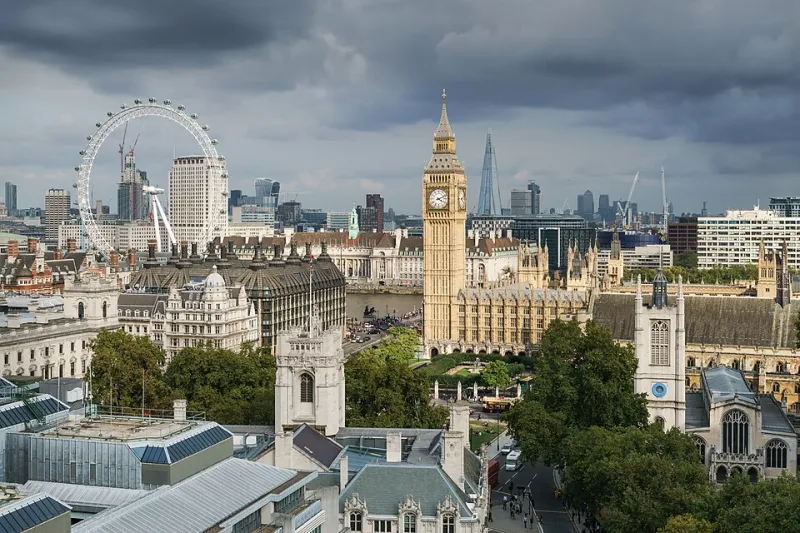
Photo: Colin, CC BY-SA 4.0, via Wikimedia Commons
Right, let's be honest. Every South East MP has a climate page on their website. Most of them have a photograph of themselves planting a tree. Some have a quote about being 'committed to net zero' that could have been written by a focus group. None of that tells you how they actually vote when the whips are on and the legislation is binding. If you want to hold your MP to account, you have to get past the press release and into the record.
1. Start with the record, not the rhetoric
TheyWorkForYou is the obvious starting point. Search your MP's name, then look at their voting history and their speeches in Hansard. The UK Parliament website has division lists, and the Commons Library publishes briefings that explain what the votes actually meant. Do not just search for the word 'climate'. Search for 'energy', 'planning', 'water', 'nature', 'air quality', 'waste' and 'transport'. Climate policy hides in all of them.
Check the dates. A vote from years ago is history, not a current promise. A speech is not a vote. A letter to a minister is not a law. The useful question is simple: what did they do when there was a binding decision in front of them?
2. Know the difference between a motion and a law
This is where most people get fooled. Early Day Motions are basically parliamentary petitions. They are symbolic. Opposition Day motions can be important politically, but they often do not change the law. Ten Minute Rule Bills are usually publicity vehicles. Private Members' Bills can become law, but most do not get enough time.
Binding votes look different. They happen at second reading, in committee, on amendments and on statutory instruments. If you want to know whether your MP actually voted to weaken or strengthen a climate measure, look for the amendment numbers and the division results. Ask: did this vote change the law, change the money or change the rules? If the answer is no, treat it as a signal rather than a statute. Signals matter, but they are not the same as action.
3. Follow the money and the committees
MPs declare interests in the Register of Members' Financial Interests. They join All-Party Parliamentary Groups. They sit on select committees. All of this is public. If your MP is on the Environmental Audit Committee or the Environment, Food and Rural Affairs Committee, their questions are worth reading. If they are not, look at what they say in debates about local issues like airports, incinerators, water shortages or road schemes.
Written questions are another tell. An MP who asks the same shallow question every month is not necessarily doing scrutiny. An MP who asks about enforcement, funding gaps or the carbon impact of a specific policy probably is. You can search parliamentary questions by MP and by topic. It takes ten minutes and it tells you more than a newsletter ever will.
4. Check the local footprint
The South East is not a generic climate constituency. It has airports expanding, incinerators burning, rivers running low, chalk streams under pressure, coastal communities facing erosion and a housing market that keeps paving over green space. Your MP's record on those issues matters. Did they turn up to the planning debate? Did they question the water company? Did they support or oppose the local energy scheme? Did they say anything about the incinerator in the next town over?
Local press is useful here, but be careful. A story about an MP 'calling for action' is not the same as an MP voting for action. Look for the follow-up. Did they write to the minister? Did they ask a question? Did they vote for the funding? Did they abstain and hope nobody noticed?
5. Read the small print of press releases
Press releases are written to be quoted. They use phrases like 'world-leading', 'ambitious' and 'committed to'. They rarely say 'we are delaying', 'we are weakening' or 'we are hoping you do not read the annex'. Check whether the funding is new or recycled. Check whether the consultation is a decision or a delay. Check whether the photo opportunity is attached to a policy that is actually funded.
Screenshot the good bits and the bad bits. Save them. When your MP claims they have always supported something, you will have the receipt. This is not about being gotcha. It is about being precise. Precision is how movements win arguments.
6. Book the surgery and ask three questions
MP surgeries are not just for passport problems. They are for constituents. Book one, turn up and ask three questions. First: what was your most recent binding vote on climate or nature, and why did you vote that way? Second: will you publish a short statement explaining how each major climate vote squares with your public position? Third: what are you doing about the specific local issue on my doorstep?
Do not ask 'do you care about the climate?' They will say yes. Ask 'how did you vote?' and 'what will you do next?' Take notes. Be polite. Be boringly factual. The aide in the room will remember that you came prepared.
7. Turn scrutiny into local rebel action
A voting record is not just a reason to be angry. It is a tool. Share what you find with your XR South East local group. Build a simple MP scorecard with the local campaign. Write to the local paper. Invite the MP to a public meeting and ask them to explain their record. Link up with other groups working on water, housing, transport and waste. One constituent with a spreadsheet is annoying. Fifty constituents with the same spreadsheet is a problem for the MP's office.
And celebrate the good votes when they happen. We are not in the business of pretending every politician is the same. Some are better than others. Some are genuinely trying. The point is to make the difference visible, so that green rhetoric has to compete with green action.
8. Do not get fooled by the vibe
Greenwash works because we are busy. It works because the press release is designed to be shared and the vote is designed to be ignored. The antidote is dull, repetitive scrutiny: check the record, read the amendment, follow the money, ask the question, write it down and tell your neighbours.
Your MP works for you. Their climate record is public. Read it like a rebel, not a consumer. Then take it to the surgery, the council chamber, the local paper and the next campaign meeting. The vote is the story. The press release is just the advert.