The Quote That Never Comes: Inside the South East’s Insurance Retreat
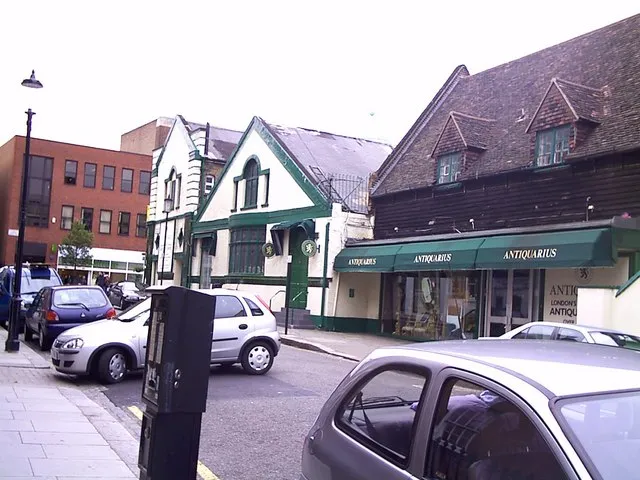
Photo: Phillip Perry, CC BY-SA 2.0, via Wikimedia Commons
There’s a particular kind of silence that follows a refused insurance quote. No dramatic letter, no explanation you can argue with — just a broker saying the underwriter won’t touch it, or a renewal price so absurd it functions as a soft exit. In the South East, that silence is getting louder.
We talk a lot about floods and storms as physical events: the water over the threshold, the tree through the roof, the substation under water. But there’s a slower climate disaster unfolding in the paperwork. It’s the quiet redrawing of the region’s housing map by insurers, lenders and risk models — and it is already sorting people into those who can afford to stay and those who can’t.
The map is being redrawn in back offices
Insurance retreat rarely looks like a blanket withdrawal from a county. It’s more granular than that: a postcode, a street, a cluster of homes near a tidal creek or a surface-water hotspot. Insurers call it “risk appetite”. Campaigners should call it what it is — postcode rationing.
In parts of Kent, Sussex, Surrey and Hampshire, homeowners are finding that standard buildings cover is either unavailable or priced beyond reach. Some are being pushed towards specialist policies with eye-watering excesses. Others are discovering that their mortgage lender won’t accept the only quote they can get. And renters? They’re often the last to know that the building they live in has become effectively uninsurable.
This isn’t a future scenario. It’s happening now, in 2026, in villages and towns that are not accustomed to thinking of themselves as climate frontlines. The Environment Agency’s flood risk maps have been public for years, but the insurance industry’s own risk maps are commercially confidential. That asymmetry matters. Communities are being priced out of cover by models they cannot see, challenge or appeal.
Who pays when cover goes?
Let’s be clear about the class dynamics. A wealthy household can absorb a higher premium, a bigger excess or even self-insure for a while. A household on a low income cannot. For them, a refused quote isn’t an inconvenience — it’s a threat to their mortgage, their tenancy and their ability to recover from the next storm.
Private renters are especially exposed. Buildings insurance is usually the landlord’s responsibility, but there’s no legal requirement for landlords to hold it. If the building isn’t covered and the worst happens, tenants can lose everything they own while the landlord’s asset is rebuilt — or not. Meanwhile, social housing providers and councils are facing their own insurance squeeze, with some authorities quietly self-insuring because the market has become too expensive or too narrow.
And here’s the uncomfortable bit: the areas most likely to see insurance retreat are often the ones with older housing stock, lower incomes and less political clout. The South East’s coastal towns and floodplain estates are not uniformly wealthy. Insurance retreat doesn’t just reflect risk; it amplifies inequality.
Flood Re was never a blanket
Flood Re, the government-backed reinsurance scheme, is often treated as the answer. It isn’t. It was designed as a temporary bridge for household insurance, and it excludes homes built after 2009. It doesn’t cover businesses. It doesn’t solve the underlying problem of rising risk — it just spreads the cost for a while. And it certainly doesn’t guarantee that every household can get affordable cover.
When insurers withdraw from a postcode, Flood Re doesn’t magically restore competition. It can keep some policies available, but it doesn’t force insurers to offer them. The scheme is a sticking plaster on a wound that is getting deeper. Pretending otherwise lets the industry and government off the hook.
Lenders, councils and the transparency gap
Mortgage lenders are the other half of this story. Most require buildings insurance as a condition of the loan. If cover becomes unavailable or unaffordable, the lender can refuse a mortgage, demand a different product, or treat the property as higher risk. That’s how insurance retreat becomes housing-market retreat: values soften, sales stall, and the people who can least afford it are left holding an asset they can’t protect.
Councils should be mapping this. They have a duty of care to residents, and many are already dealing with the fallout through housing advice, homelessness services and emergency planning. But few are publicly tracking insurance withdrawal in their area. Fewer still are using their planning powers or their pension investments to push insurers and lenders on climate risk disclosure.
That’s where campaigners come in. Freedom of Information requests to local authorities can reveal how many council-owned or housing-association properties lack adequate cover. Questions at council meetings can force the issue onto the record. Shareholder activism through local government pension schemes — which hold billions in financial stocks — can press for transparent, street-level risk data rather than glossy sustainability reports.
What rebels can do
First, make insurance visible. It’s not a niche financial product; it’s the invisible infrastructure that keeps housing habitable. Run stalls, write to local papers, ask neighbours what their renewal quote looks like. Collect stories — anonymised if needed — and show the pattern.
Second, target the enablers. Insurers, lenders and councils all benefit from a lack of public scrutiny. Demand that local authorities publish climate risk assessments that include insurance availability. Push MPs to ask questions about postcode-level withdrawal. Support renters’ unions and housing campaigns that are already fighting for decent, safe homes.
Third, link it to the wider fight. Insurance retreat is not separate from flood defence cuts, planning deregulation or the housing crisis. It’s the financial system’s way of saying what governments won’t: that some places are being written off. Our job is to refuse that logic — and to build the kind of movement that makes retreating from communities politically impossible.
The water is rising. The policy is already shrinking. It’s time to make some noise about it.