Deck the Halls, Dodge the Questions: A Rebel’s Guide to Your Town’s Festive Lights
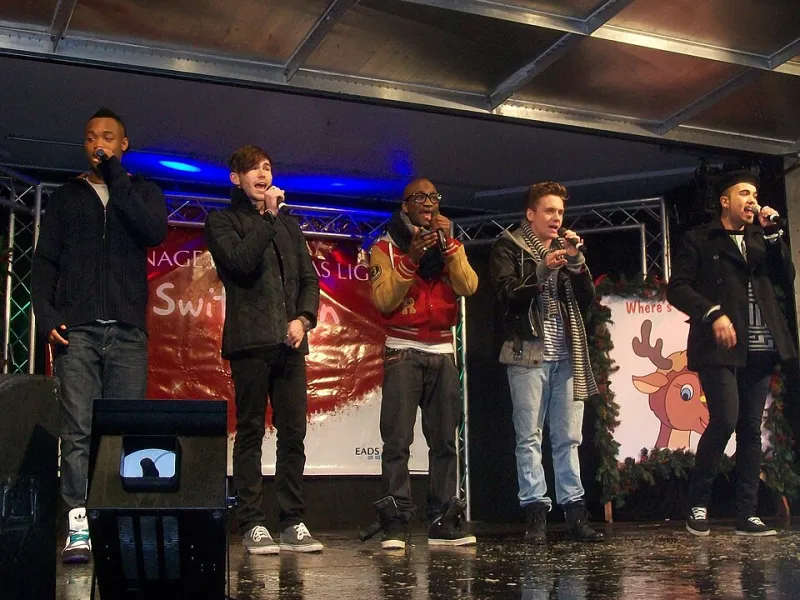
Photo: User:AnemoneProjectors, CC BY-SA 2.0, via Wikimedia Commons
Mid-November in the South East means the same ritual every year: a crowd in the high street, a local radio presenter with a microphone, a countdown, and a cheer as the Christmas lights blink into life. It’s lovely. It’s also a moment when councils that declared a climate emergency quietly hope nobody looks too closely at the electricity bill, the public money and the carbon behind the sparkle.
We’re not here to be the Grinch. Festive lights matter. They bring people into town centres, they lift spirits in a grim season, and they give kids something to remember. But if a council has promised to cut emissions, then the Christmas lights are not a trivial side issue. They are a test of whether the climate emergency was a real commitment or a press release that got packed away with the tinsel.
The bit councils leave out of the press release
Every year we get the same upbeat statement: “Our Christmas lights switch-on will be bigger and better than ever.” What we rarely get is the basic information that would let residents judge whether “bigger and better” also means “higher carbon and higher cost”.
How much electricity does the display use? Where does that electricity come from? Is it on a renewable tariff, or is the council just buying standard grid power and calling it green? How long are the lights on each day? Are they on timers? Are they dimmed overnight? What did the display cost to buy, run and maintain? And who signed off the spending?
These are not gotcha questions. They are the minimum you’d ask before spending public money on anything else. The fact that they are so rarely answered tells you something about how seriously the climate emergency is being taken.
LED is not a magic word
Yes, LED lights use far less energy than the old incandescent bulbs. That matters. But “we’ve switched to LED” is not the end of the conversation. It is the start of it.
A town centre can have LEDs and still waste energy by leaving them on all night, by running oversized displays, by heating a temporary ice rink with a diesel generator, or by powering the whole thing from a fossil-heavy grid at peak times. A smaller display with good controls can beat a huge LED display with no controls at all.
So when a council says “we use LED”, ask the follow-up: are they on timers? Are they dimmed after a certain hour? Is there a curfew? Are the lights powered by a renewable supply, or is the council just hoping nobody checks? Is the switch-on event itself powered by a diesel generator humming away behind the stage?
These are the details that separate a genuine low-carbon celebration from a greenwash with fairy lights.
Questions to ask before the countdown
If you’re heading to a switch-on this year, take a few questions with you. You don’t need to hijack the stage. You can email your council, ask at a scrutiny committee, raise it with your ward councillor, or just post the answers — or the silence — on social media.
Try these:
- How much electricity will the town’s Christmas lights use this year, and what is the estimated carbon footprint?
- Is the supply backed by a renewable tariff or a REGO-backed green tariff? Can you publish the evidence?
- Are the lights on timers and dimmed overnight? If not, why not?
- What did the display cost in total, including installation, maintenance, security and energy?
- How does that spending square with the council’s climate emergency declaration and its own carbon budget?
- Were low-carbon options considered — such as smaller displays, shared infrastructure across towns, solar-powered elements, or a community switch-on that doesn’t rely on diesel generators?
- Will the council publish a short post-event carbon and cost report?
That last one is a good test. If a council is serious, it should have nothing to hide.
What good looks like
A low-carbon festive display doesn’t have to be dull. It can be beautiful, communal and cheaper to run. Think LED lights on strict timers, dimmed after 10pm, powered by a genuine renewable tariff. Think switch-on events powered by the grid or battery storage rather than diesel generators. Think councils reusing decorations year after year instead of buying new ones, and sharing infrastructure between neighbouring towns.
Some councils in the South East are already doing bits of this. Others are not. The difference is rarely about technology. It is about whether anyone has made it a priority.
And that is where rebels come in. We don’t need to campaign against Christmas. We need to campaign for honesty. If a council can find the money and energy to light up the high street, it can find the time to answer a few basic questions about how it is doing so.
Make it a campaign, not a curtain-twitch
The festive lights are a small thing, but they are a useful thing. They are visible, local and easy to talk about. They give us a way into bigger questions: who decides how public money is spent, whose climate commitments are real, and whether “community celebration” has to mean “business as usual with more glitter”.
So this year, enjoy the lights. Take the kids. Buy the mulled apple juice. But take a question with you too. Ask your council what the switch-on really costs the climate — and whether they can justify it. If they can, great. If they can’t, that’s not a reason to cancel Christmas. It’s a reason to organise.
The lights will be on for weeks. The climate emergency is still on too. Let’s make sure our councils remember that.