Plugged Out: Who's Jumping the South East's Grid Queue — and How Rebels Can Push Back
There's a stretch of farmland near you, somewhere in Kent or Sussex or the Thames Valley, where a solar farm has planning permission, a developer, an inverter spec and a signed lease. It also has no date. Not a date next year, not a date in 2029 — just a number in a queue that keeps moving the wrong way.
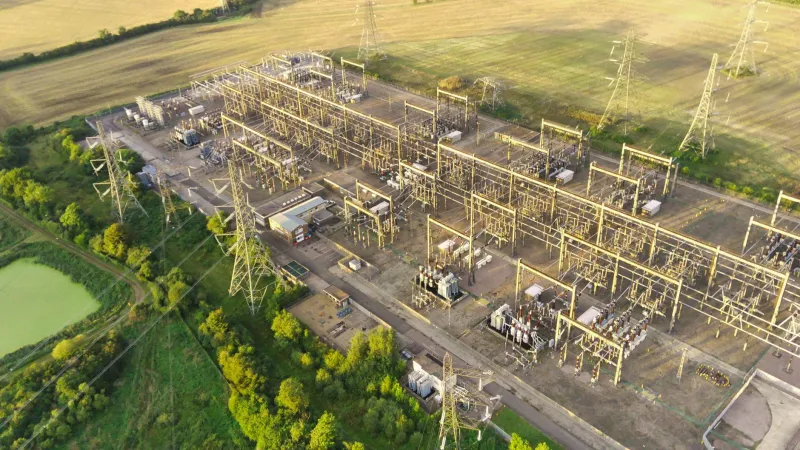
Meanwhile, twelve miles away, there's a compound behind a chain-link fence with a planning application nobody leafleted about. That one is going to be built, connected and humming within eighteen months.
The gap between those two facts is the whole climate fight in the South East right now, and it barely gets a paragraph in most coverage.
There Isn't Really a Queue
We talk about "the grid connection queue" as though it were a bus stop. First come, first served, orderly, a bit slow. It isn't. It's a speculative land grab with a spreadsheet attached.
Here's the rough shape of it: a developer applies to the local distribution network operator — UK Power Networks across much of the South East, SSE in parts of the region — for a connection. They pay a deposit, they get a date. That date might be 2031. Then they sit on it. They might have no intention of ever building anything. They might be holding three sites to see which one stacks up. They might be waiting to flip the whole thing to another company for a profit.
Meanwhile the connection date they're squatting on is capacity that a community solar co-op, a real onshore wind scheme or a genuinely useful battery project cannot touch. This is the bit that gets missed in the pylon discourse: the constraint isn't only copper and steel. It's paper.
Reforms have been in the works — Ofgem and the National Energy System Operator have been pushing to clear out speculative applications and shift to a "first ready, first connected" model. Good. But watch what "ready" ends up meaning. Ready for whom?
The Peaker Loophole
Small gas plants — "peakers" — have a particular advantage in this system, and they know it.
A gas engine under roughly 50 megawatts is classed as a smaller-scale project. It slips through a lighter consenting route. It doesn't need to win a Contract for Difference auction. It can pick up money from the Capacity Market for simply existing, ready to fire up when demand spikes and the wind drops. And crucially, it needs comparatively little from the grid compared to what a large renewable scheme asks for.
So you get a pattern that should infuriate anyone who cares about the climate: a fossil plant with a thirty-year operational life gets plugged in quickly, into the same constrained network that a wind farm has been waiting four years to reach.
You'll have seen the shape of these proposals already — usually a small site off a trunk road, a stack, a bund, a noise assessment, a promise about "flexibility" and "security of supply." The planning documents are dull on purpose. Nobody leaflets a substation.
Data Centres, or: The Cloud Has a Waiting List
The other great queue jumper is the data centre. Some of the largest connection requests in the country have come from hyperscale applications, and the South East's position — close to London, cable routes, fibre — makes it prime territory.
A data centre needs enormous, flat, constant power. It also usually employs about forty people once built. It contributes almost nothing to the local grid in return. And when it's granted a connection, that capacity is gone for a generation.
We've written before about the land grab itself. The grid dimension is the part that makes it permanent.
What This Looks Like on the Ground
Picture the South East's network as a spine running up from the coast through Kent and Sussex, looping around the M25, threading out west along the Thames Valley toward Oxfordshire and down toward the Hampshire coast. It's old in places and it's congested almost everywhere. The big transmission upgrades you've been reading about — new pylons, new 400kV lines — are real and in some cases necessary. But they take a decade.
In the meantime, every substation in the region is a choke point, and every choke point is a decision about who gets to electrify first. Those decisions are being made in offices by people you didn't elect, using criteria you haven't seen, and the results land on your council's planning portal with a consultation period shorter than a school term.
That's the frontline. Not the field with the panels. The compound.
The Community Energy Squeeze
The cruel joke is that community-owned renewables are exactly what the grid should be prioritising — locally supported, locally owned, generating local benefit, less likely to be fought at planning. Groups like Repower Balcombe in Sussex, Ovesco in Lewes, BHESCo in Brighton and the wider Community Energy South network have spent years proving the model works.
And they are routinely quoted six-figure connection costs and told to come back in 2034.
A commercial data centre with a legal team gets a date. A volunteer-run co-op with a share offer and four hundred local members gets a shrug. If you want one sentence to explain why people stop believing the system is neutral, there it is.
What Rebels Can Actually Do
This isn't a problem you solve by standing outside a substation with a banner, satisfying though that might feel. It's a problem you solve by being boring, persistent and in the room where the paperwork happens.
Watch the planning portal. Set an alert on your district council's planning search for "substation", "gas", "peaking", "standby generation", "battery storage" and "data centre". Read the screening opinions. Comment early — a well-argued objection at scoping stage lands harder than a furious one at determination.
Ask your MP a specific question. Not "do you support clean energy" — that gets you a form reply. Try: "How many gigawatts of grid connection requests in this constituency are currently held by projects that have not submitted a planning application?" That's answerable, and it's embarrassing.
Respond to the consultations. Ofgem and NESO consultations on connections reform are dense and dull and almost nobody replies. A hundred thoughtful responses from a region changes the framing. Community Energy South and similar bodies often publish template responses you can adapt in twenty minutes.
Back the co-ops with more than likes. Buy shares. Offer land. Turn up to their AGMs. Write to your council about Local Area Energy Planning — the process where councils are supposed to map their own energy future, and which in most of the South East is either embryonic or quietly ignored.
Be honest about what you're opposing. A grid-scale battery park is not the same as a gas peaker, and treating them identically makes us easy to dismiss. Scrutinise fire safety, land use and community benefit on storage by all means. But don't hand ammunition to the people who want to burn gas until 2050 by pretending the technologies are equivalent.
The Unsexy Frontline
Extinction Rebellion got good at shutting down the places where decisions are made. The trouble is that the most consequential decisions in the South East right now aren't being made in a ministry or a boardroom with a nice entrance. They're being made in connection queues, capacity registers and planning screenings, by people who would be genuinely surprised to learn anyone was watching.
So watch. It's the least glamorous rebellion available and probably the most useful one this winter.
Got a substation, a peaker proposal or a stalled community energy scheme near you? Send it to the XR South East campaign roundup — we'll help map it.